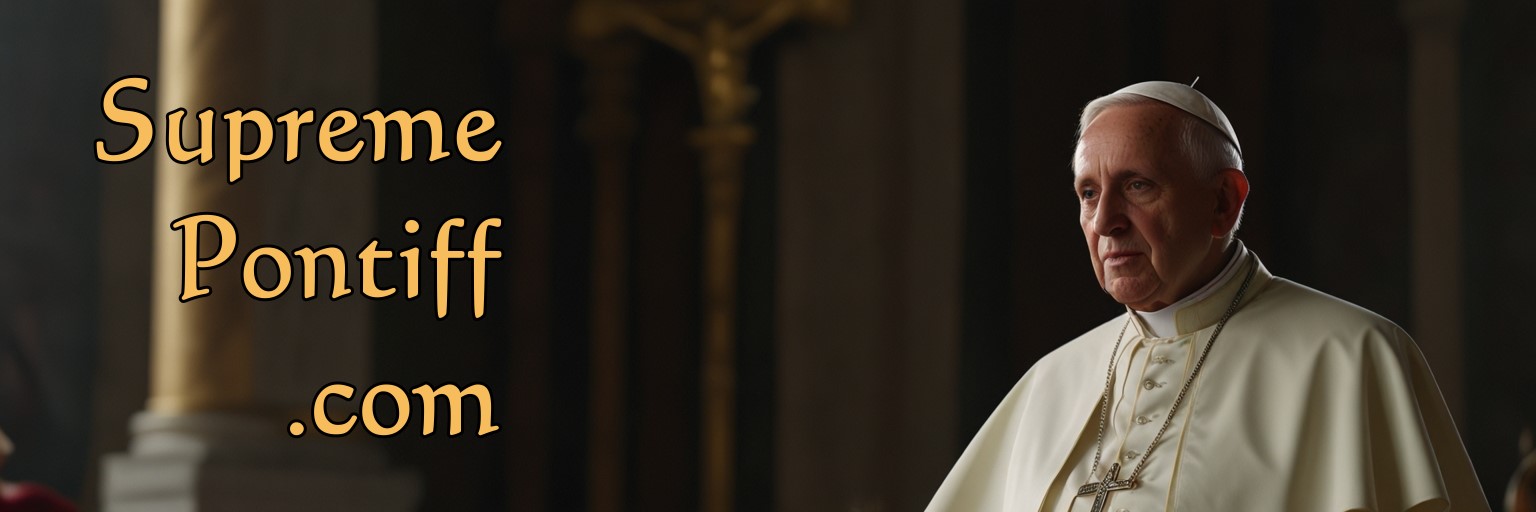
The term “Supreme Pontiff” is most commonly associated with the Pope, the leader of the Roman Catholic Church and the Bishop of Rome. The title reflects the Pope’s role as a spiritual leader and his authority over the global Catholic community.
Historical Origins
The title “Pontiff” derives from the Latin word “pontifex,” which means “bridge-builder.” Historically, this term was used to describe members of the ancient Roman priesthood who were responsible for maintaining the relationship between humans and the divine. Over time, as Christianity spread throughout the Roman Empire, the term became associated with Christian leaders.
The first Pope is traditionally considered to be Saint Peter, one of Jesus Christ’s apostles. According to Catholic tradition, Peter was appointed by Christ to lead His followers and is believed to have been martyred in Rome around 64 AD. The papacy has since evolved into a central institution within Christianity, particularly in Catholicism.
Role and Responsibilities
The Supreme Pontiff holds several key responsibilities:
- Spiritual Leadership: The Pope serves as a spiritual guide for Catholics worldwide. He provides teachings on faith and morals through encyclicals, apostolic letters, and public addresses.
- Governance of the Church: The Pope oversees the administration of the Vatican City State and has authority over various church institutions, including dioceses and religious orders. He appoints bishops and cardinals who assist him in governing the Church.
- Ecumenical Relations: The Pope plays a crucial role in fostering dialogue among different Christian denominations and other religions. He seeks to promote unity among Christians while respecting diverse beliefs.
- Moral Authority: As a moral leader, the Pope addresses contemporary social issues such as poverty, climate change, human rights, and peacebuilding efforts. His statements often carry significant weight in global discussions.
- Ceremonial Duties: The Pope presides over important liturgical celebrations, including Easter and Christmas Masses at St. Peter’s Basilica in Vatican City.
Significance in Modern Society
The role of the Supreme Pontiff extends beyond religious boundaries; it has significant implications for international relations and social justice movements. Popes have historically used their platform to advocate for peace during times of conflict (e.g., World War II) or to address humanitarian crises, such as famine, poverty, and refugee displacement. For instance, recent Popes have spoken out against war and violence, emphasizing the need for dialogue and reconciliation among nations.
They have also championed social justice issues, calling for greater attention to the plight of marginalized communities and advocating for policies that promote human dignity and equality.
The Pope’s moral authority often influences political leaders and can mobilize public opinion on critical global challenges, making the papacy a significant player in international diplomacy. Through various initiatives, including interfaith dialogues and humanitarian outreach programs, the Supreme Pontiff continues to inspire millions around the world to work towards a more just and peaceful society.